The Joy(and Terror) of Best Laid Plans: My Experience with Slow Travel
I’m back! It’s been a little while, but you know how busy things get at times. However, I am beyond excited to describe to you what I’ve been up to this past week: Slow Travel!

{Now what ridiculous adventure have I gotten myself into this time?}
For those who do not know, DIS offers the Slow Travel Initiative to members of the Media Team as a way to prioritize low-emission forms of transportation, specific engagement with local communities, and the ability for explorers such as myself to really slow down and enjoy the experience of visiting a new and exciting destination. In other words, this opportunity could not be more up my alley.
So where did I end up going you may ask? Well, after a little bit of soul searching, I decided that nothing would be better for me right now than setting off on my own for a place that I had never heard of before arriving in Denmark: I’m talking about the Faroe Islands!

{The only time I'll ever add an image that's not from my own camera}
The Faroe Islands, also known as the Faroes or Føroyar, is an archipelago in the North Atlantic Ocean located in between Iceland, Norway, and the Northern part of Scotland. They are considered a rigsdel, or ‘autonomous territory’ of Denmark, with a population of around 55,000 total inhabitants. In other words, the Faroe Islands are a bunch of small islands found in the middle of nowhere.
And they are incredible.

{To be honest I'm not sure if any caption is necessary here}
To get to the Faroe Islands, you only have two options: fly by plane or take a ferry. And since this is Slow Travel that we’re talking about, there was really only one option for me to choose. The sole ferry system that operates a continuous route to the Faroe Islands is owned by a company called Smyril Line, which begins its journey from Denmark at one of the northernmost points in Jutland, in a small city called Hirtshals. As a result, my entire Slow Travel itinerary consisted of me taking a series of trains from Copenhagen to get to Hirtshals, then taking the ferry from there to the capital of the Faroe Islands, also known as Tórshavn. My initial proposal was to leave Copenhagen on a Sunday morning to catch my ferry for Tórshavn in the afternoon, arrive in the capital by Tuesday morning, then leave the Faroes on the following Friday night to return back to Copenhagen on the following Sunday afternoon. If everything went to plan, I would have almost four full days in Faroe Islands and a little less than that time spent traveling. What could go wrong?

{The exact kind of text message you want to see on a Friday afternoon}
Unfortunately, things were off to a rocky start even before I boarded my first train. Two days before I was scheduled to leave from Copenhagen, I got a notification from Smyril Line stating that due to weather conditions, the ferry that I had booked would be leaving a day later from Hirtshals and arriving in Tórshavn late at night on Tuesday. As a result, I still kept my train ticket to Hirtshals the same, but had to find a place to spend the night in Hirtshals before departing the next day for the ferry. I began my journey from Copenhagen Central Station at 6:52 in the morning on Sunday, March 29th, riding my first major train to Aarhus and then beyond.

(The first train of many - Copenhagen Central Station to Aarhus}
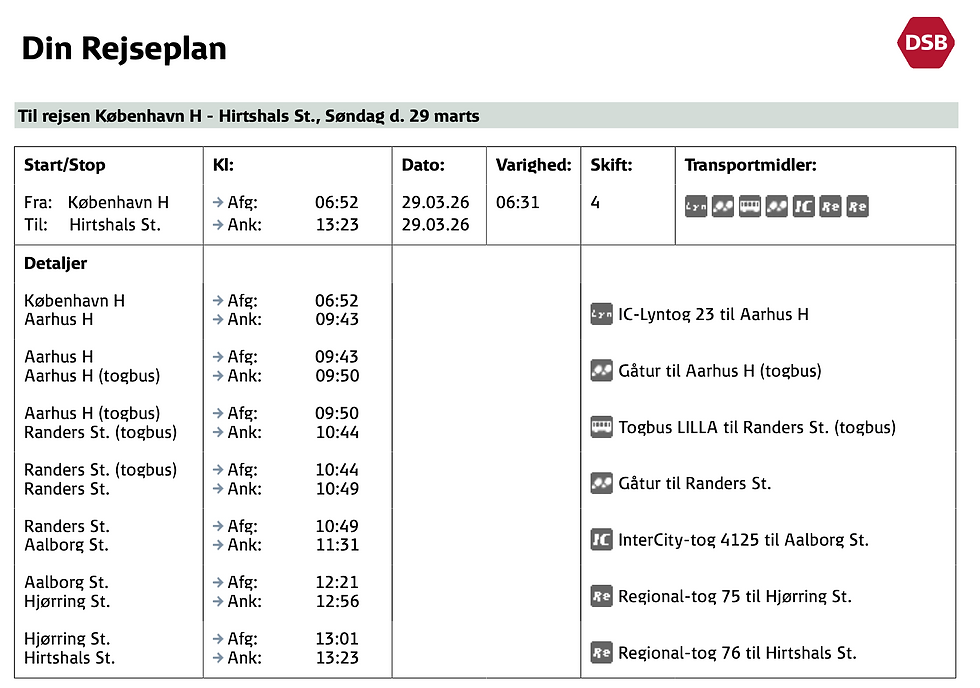
After getting off at Aarhus, I had a quick change to a public transit bus that took me to Randers Street in the Jutland region of Denmark, after which I took two more shorter trains with changes in Hjørring and Aalborg before arriving in the port of Hirtshals. One major form of transportation down, one to go. Now all that was left before the ferry was to enjoy my one day in Hirtshals!
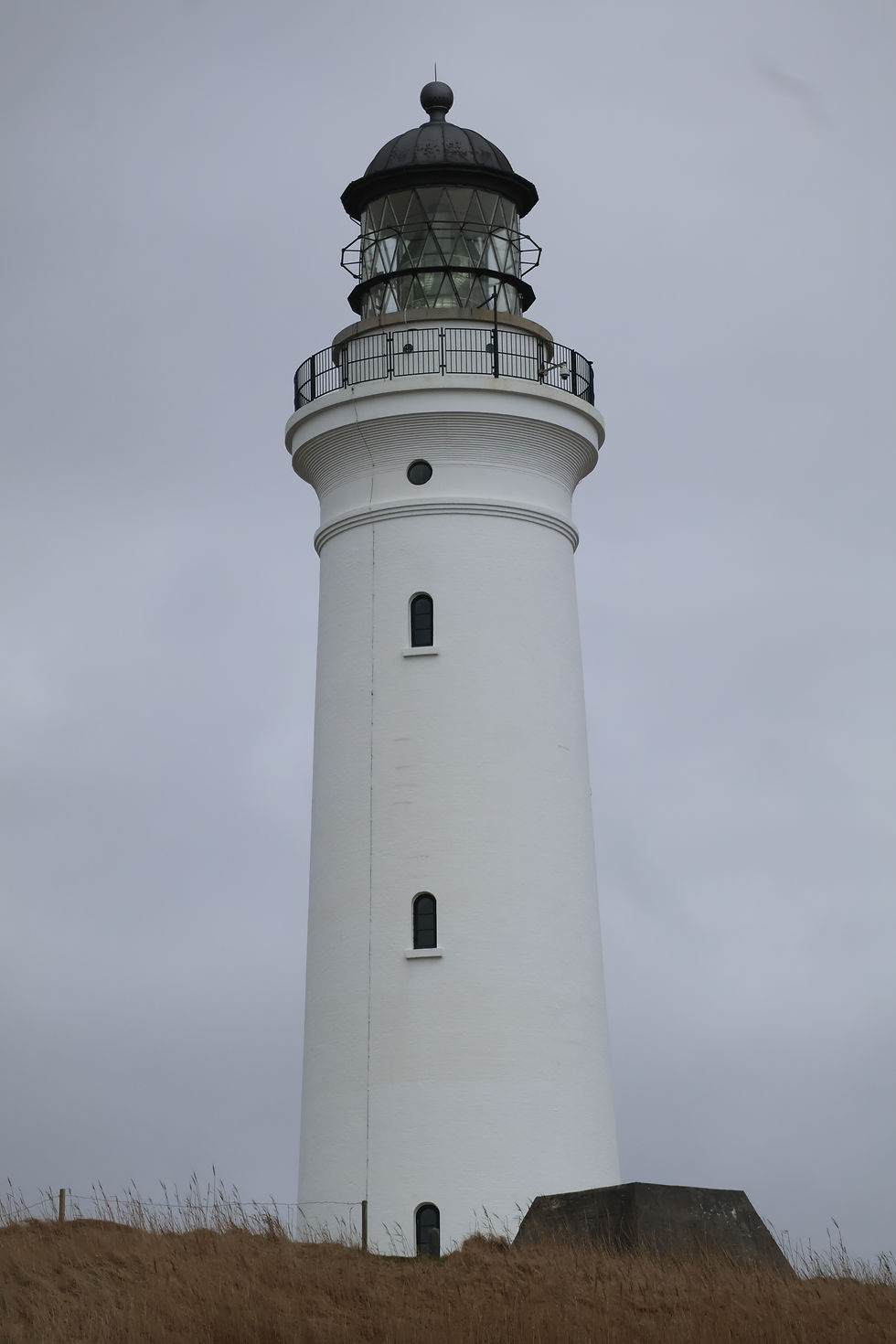
Which was actually fantastic! If you ever have the opportunity to visit Hirtshals or the northern part of Jutland in general, I would highly recommend it. Hirtshals itself is a small but cozy port town, brimming with local pride for their fishing and marine life communities. While in the city I visited the Historical and Bunker Museums, main beachfront(called the Husmoderstranden), and lighthouse, which had some absolutely incredible views. If I had more time I would have visited their aquarium, which is actually one of the largest in Europe!
{Some highlights of Hirtshals: the lighthouse, a map of the area, the Husmoderstranden, and a historical boat from the Hirtshals Musuem!}
From Hirtshals, I was able to board my ferry for Tórshavn without a hitch, which then began my journey by water to the Faroe Islands. And I’m sorry, dear readers, if you are a bit squeamish, but yes I did in fact get sea sick. Since I had taken a ferry across the English channel before, the original thought of getting motion sickness on the ferry didn't even cross my mind. But once I was on board for a couple of hours, my mind, body, and stomach really started to feel it. Suffice it to say, my journey to the Faroes was mainly spent holed up in my cabin eating and drinking whatever I could get down and getting lots and lots and lots of sleep.

{My humble abode for the next 30 or so hours - thank goodness for dramamine}
On my arrival to the Faroe Islands, I departed my ferry from Tórshavn around 10pm at night and arrived at my Airbnb in the capital shortly after. Unfortunately, the code to the door that my host provided was not working properly, so I had a desperate 15 minute stretch where I was frantically working the door lock in the pitch black and rainy weather. Luckily, I was able to use an additional code that the host provided to get into the building from a different side. I finally settled into my new home after an arduous 64 hour-long journey to the capital.

{A welcome sign after getting off the ferry - a true sight for sore eyes}
The next morning, I got my bearings by going to the capital’s Tourist Center just a couple blocks away from my living space. Please keep in mind that I had planned a general outline of my stay in the Faroes far before I got there, but due to the ferry arriving a day later and my issues accessing my housing I was feeling a bit frazzled. I went to the Tourist Center for a bit of local direction regarding the remainder of my stay here in Tórshavn.

Thankfully, it was an incredibly insightful experience. The front desk assured me that I could see all the major sights and attractions within the capital city in one day, and they even recommended that I take a day trip on foot to a nearby city if I was feeling adventurous. And hey, I had initially planned on biking to another city within the Faroe Islands originally, so this was definitely in the cards.
Kicking off my first full day in Føroyar, I began a walking tour of all things in the capital city. I went to the historic district of Reyn and discovered Tinganes, the seat of the Faroe Island’s Parliament and government offices that have recorded gatherings as early as 825. I then walked a little further down to see Fort Skansin, a historic site serving as a barricade against pirates and raids against the town, as well as operating as a military base for the British army, which occupied the Faroe Islands during the Second World War. Lastly, I walked through the dazzling city park to arrive at Listasavn Føroya, or the national gallery of art for the Faroe Islands.

[pictures of portrait artwork found in the Listasavn Føroya -
I fear a mandatory visit for a Studio Art Major]
The next day was a big one: a journey on foot to Kirkjubøur, or the historical center for religion and culture within the Faroe Islands. My guide told me that it would only be around a two hour walk from Tórshavn to Kirkjubøur via the main road heading out of the city, but unfortunately I think that there was a general miscommunication in the travel path. Instead of understanding that I was supposed to travel up the pedestrian footpath and over the mountain to arrive at Kirkjubøur via a specific hiking route, I was told to follow the main road that all cars traveled to Kirkjubøur, meaning that I walked a solid 7 miles there and another 7 miles back. Luckily, I had done some cardio training for my trip beforehand, so I was able to make the walk there and back in only about two and a half hours walking each way.
But let me tell you, Kirkjubøur speaks for itself.


{These images were taken via my own personal camera - please check out my Instagram page linked in my bio if you'd like to see more!}
I might have forgotten to mention that there are approximately 75,000 sheep currently living in the Faroe Islands, which means that there are significantly more sheep than people hanging around the archipelago. It was an absolute joy to photograph these animals on my journey to and from Kirkjubøur, as well the dozens of various seabirds and agricultural spots I wandered past during my time in the islands.
However, it was the views of my journey and the destination itself that I will hold with me for a lifetime. St. Magnus’s Cathedral(2nd picture above) was completed during the 14th century, with the original ruins still standing to this day. I also saw St. Olav’s Church on my route to the village, which was another wonderful full circle moment in relation to my home college(the name is the exact same, one just stems from Old Norse and the other modern!)
On my last day, I decided to take things slow. I packed up all my things, went to a cafe recommended to me by the tourism office, and got ready to enjoy my last day in the Faroes on my own time. Thank goodness I decided to do so, because minutes after arriving in the cafe I received another communication from Smyril Line saying that my ferry would be leaving at 4pm today rather than 8pm. As a result, I spent the rest of the stay in Tórshavn in a cozy little cafe just soaking in the location before walking to my check-in for the ferry.

{Can you ever go wrong with a ham and cheese sandwich and some drip coffee?}
After boarding the ferry once more, our captain informed us that due to favorable weather conditions, we would be arriving back in Denmark not at 11am on Sunday like originally specified, but 1am at night. Once again, panic struck me as I rushed to find accommodations in Hirtshals for one night while also rebooking my train ticket to take me back to Copenhagen on an earlier schedule. And although the ferry cellular reception was dubious at best, I was able to get everything figured out before I arrived in Hirstahls at one in the morning, took a cab to my hotel, and promptly crashed.
I woke up early the next morning(well no, actually it was the same day) to scarf down some hotel breakfast before heading to the Hirtshals train station to begin my long journey back to Copenhagen. And since it was on Easter Sunday that I was making my return journey across Denmark, my last hurdle was navigating the multiple buses, trains, and tight schedules that I had to take since many of the routes were either closed for the holiday or had regular scheduled maintenance. All in all, I had 6 changes crossing basically the entirety of Denmark before finally arriving back in Copenhagen Central Station at 3:06pm sharp on Easter Sunday. And hey, after all that I still was able to bike back to my Culinary LLC!

{A selfie from my final train back to Copenhagen - exhausted but loving life}
Holy. Cow. If that doesn’t sound like a journey of journeys then I don't know what does. It was so incredible being in the Faroe Islands and experiencing such a unique and incredible island and coastal culture, but the stresses of every travel obstacle really impacted my overall enjoyment of the trip. I chalk most of it up to problems with the ferry and not having a solid enough back-up plan for most of my affairs, as it was definitely a learning experience for myself in so many different ways.
If there was anything I would do differently, it would be to budget more time for everything. I thought I had a solid original schedule in place, but man, sometimes the ferry programme can throw a wrench in everything. That being said, I highly recommend any and all forms of Slow Travel for anyone interested in it, regardless if you’re a member of the Student Media Team or not. The opportunity to complete a journey to a place where you’re intentionally engaging with all the history, geography, and people around it transforms travel from a checklist to an immersive experience that affects you on so many levels. Even with all the hiccups and problems that I encountered during my journey to the Faroe Islands, I would do it all again in a heartbeat–I think that the expedition itself is an invaluable aspect of my study abroad experience as a whole.

{My final view of Tórshavn from the ferry deck}
I’m already wishing I was back! However, if you or someone you know is personally interested in exactly what it takes to go from Copenhagen to Hirtshals, ferry to Tórshavn, and do it all over again on the way back, here's a quick outline of my travel itinerary:
Route taken from Copenhagen Central Station to Hirtshals: København H->Aarhus->Randers->Aalborg->Hjørring->Hirtshals
Route taken from Hirtshals to Tórshavn: Boarded the Smyril Line Norröna at Hirtshals to Tórshavn, took the exact same route back

Sites visited in the Faroes:
Day One: Visit Tórshavn, Tinganes, Reyn, Fort Skansin, Breyđvirkia Bakery, Vidarlundin(the city park), Listasavn Føroya, the National Stadium, SMS(shopping center for groceries and keepsakes), and Grasagardur(park and playground)
Day Two: The Old Cemetery, Vesturkirkjan, Kirkjubøur, St. Magnus Cathedral, St. Olav's Cathedral, ROKS restaurant(for the best seafood you'll ever have in your life!)
Day Three: Trappan, Rádhúsid(city hall), the Brell Cafe, and Vágsbotnur(the Tórshavn marina)
Route taken from Hirtshals to Copenhagen Central Station: Hirtshals->Hjørring->Aalborg->Randers->Aarhus->Fredericia->Odense->København H
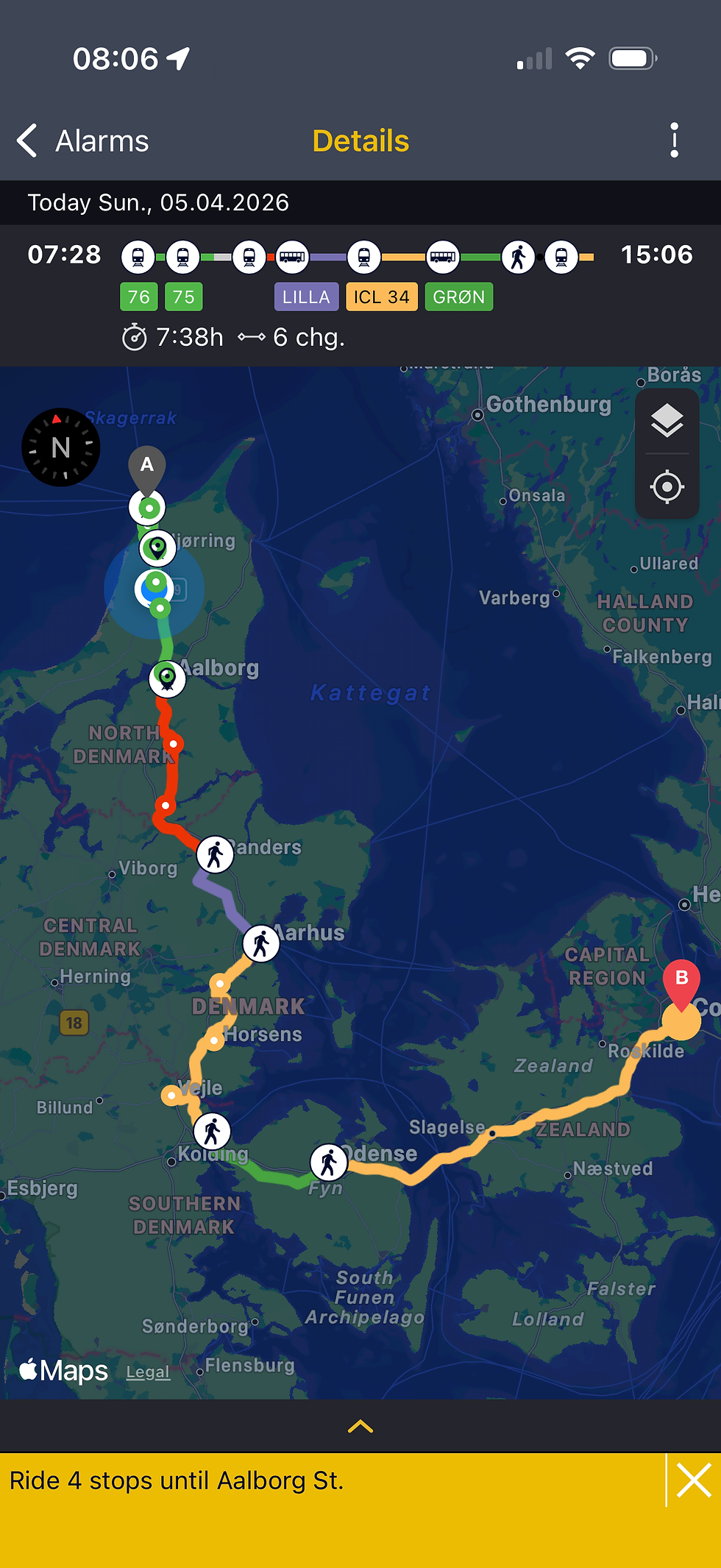
(I highly recommend both the "DSB" and "Rejseplanen" apps for travel throughout Denmark, all my trains and buses were on time and my route, albeit crazy, ran fantastic!)


Comments